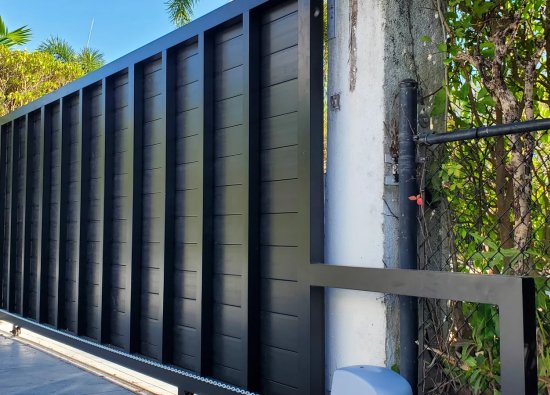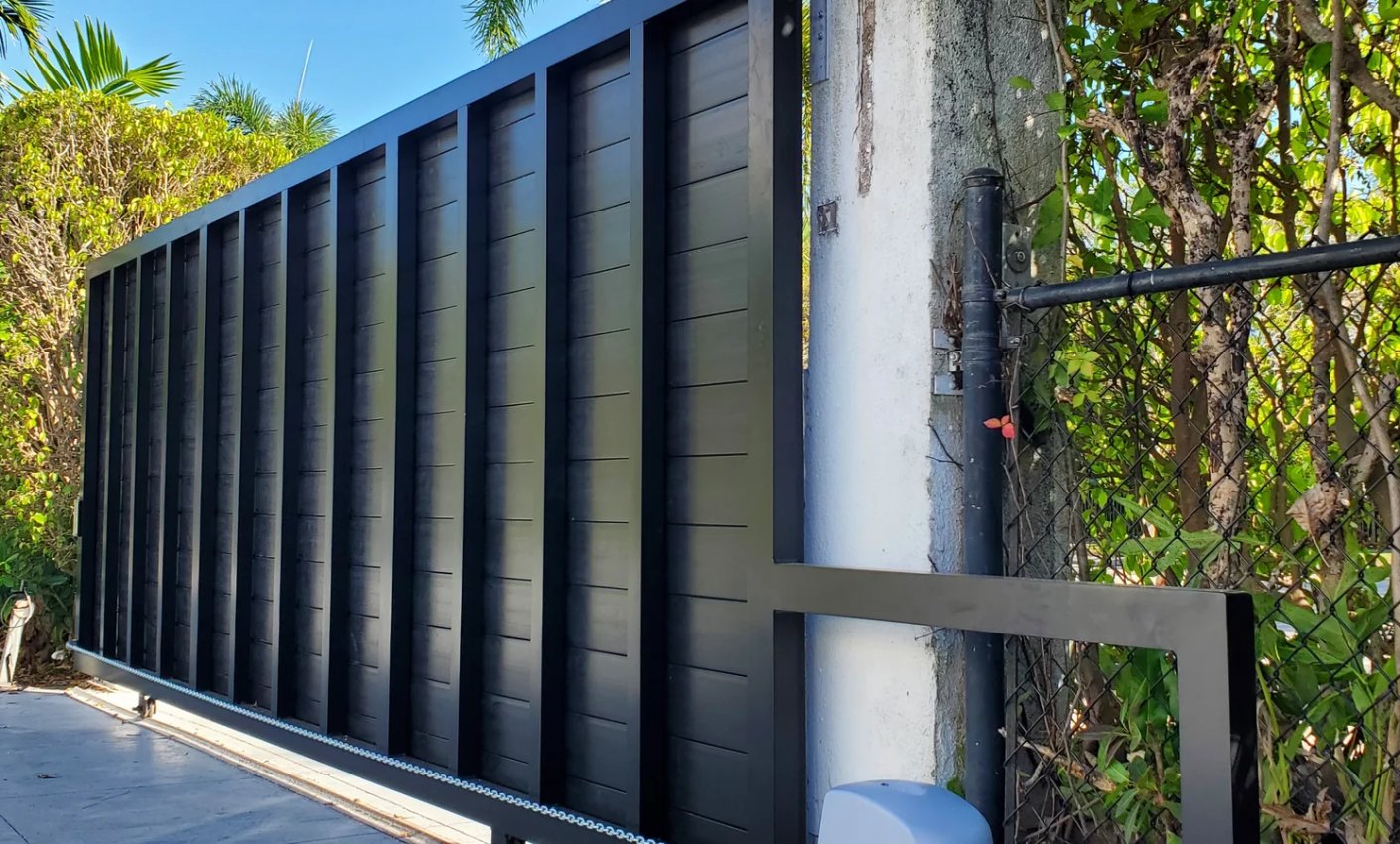
An automatic sliding gate has to move a heavy barrier repeatedly while controlling vehicle access at the edge of a property. Reliable operation depends on the gate structure, travel path, operator, safety devices, power, controls, and maintenance plan being designed as one system.
Security Install US / System64 provides automatic gate installation and service in Miami for residential, condominium, and commercial properties. The work can include a new operator, modernization of an existing gate, access-control integration, troubleshooting, and preventive maintenance.
Survey the opening and travel path
The first site visit should measure the clear opening, available slide distance, grade, drainage, vehicle approach, pedestrian activity, and locations for protected power and communications. These conditions determine whether the existing gate can be automated safely and serviced without blocking normal property operations.
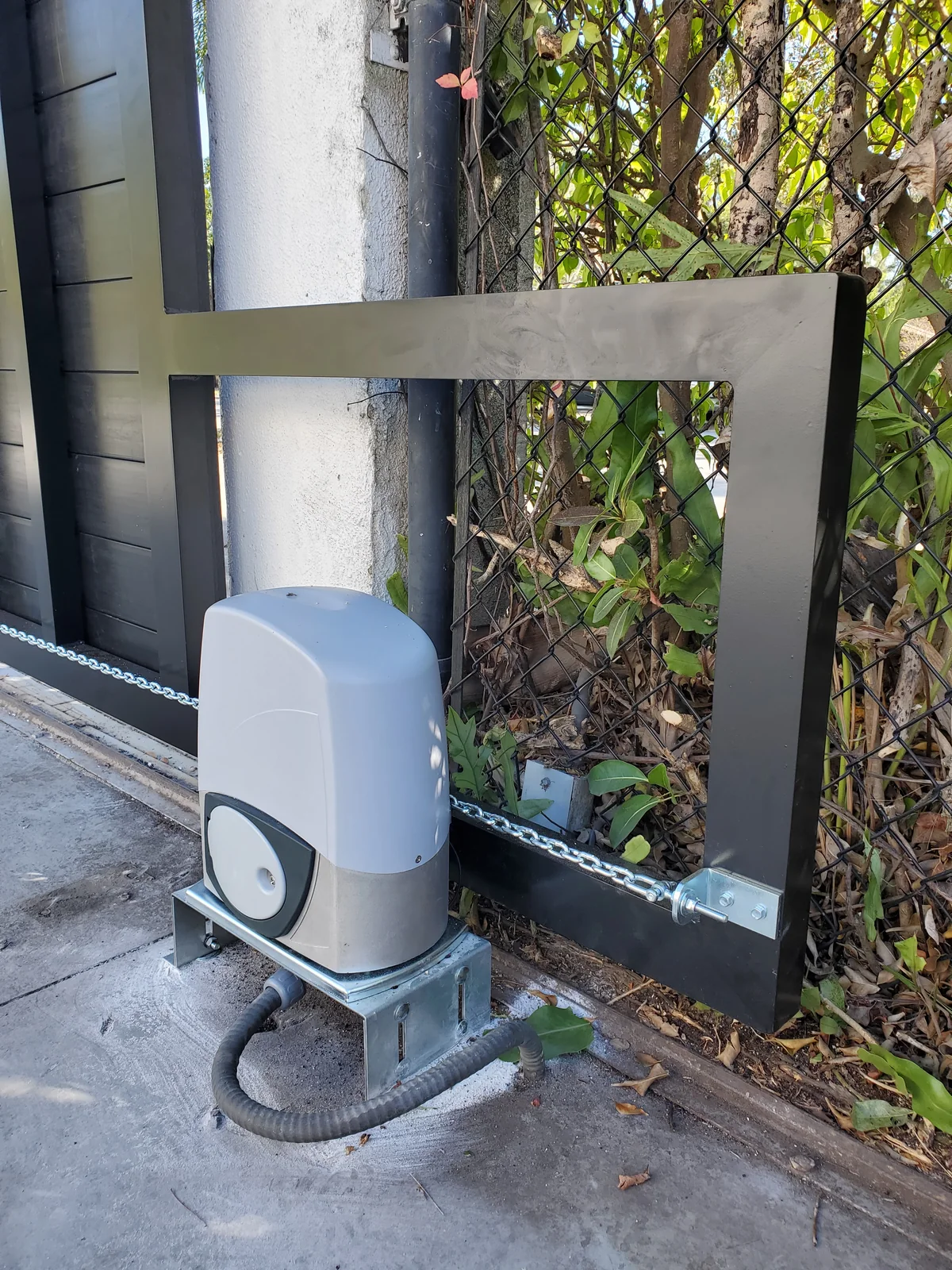
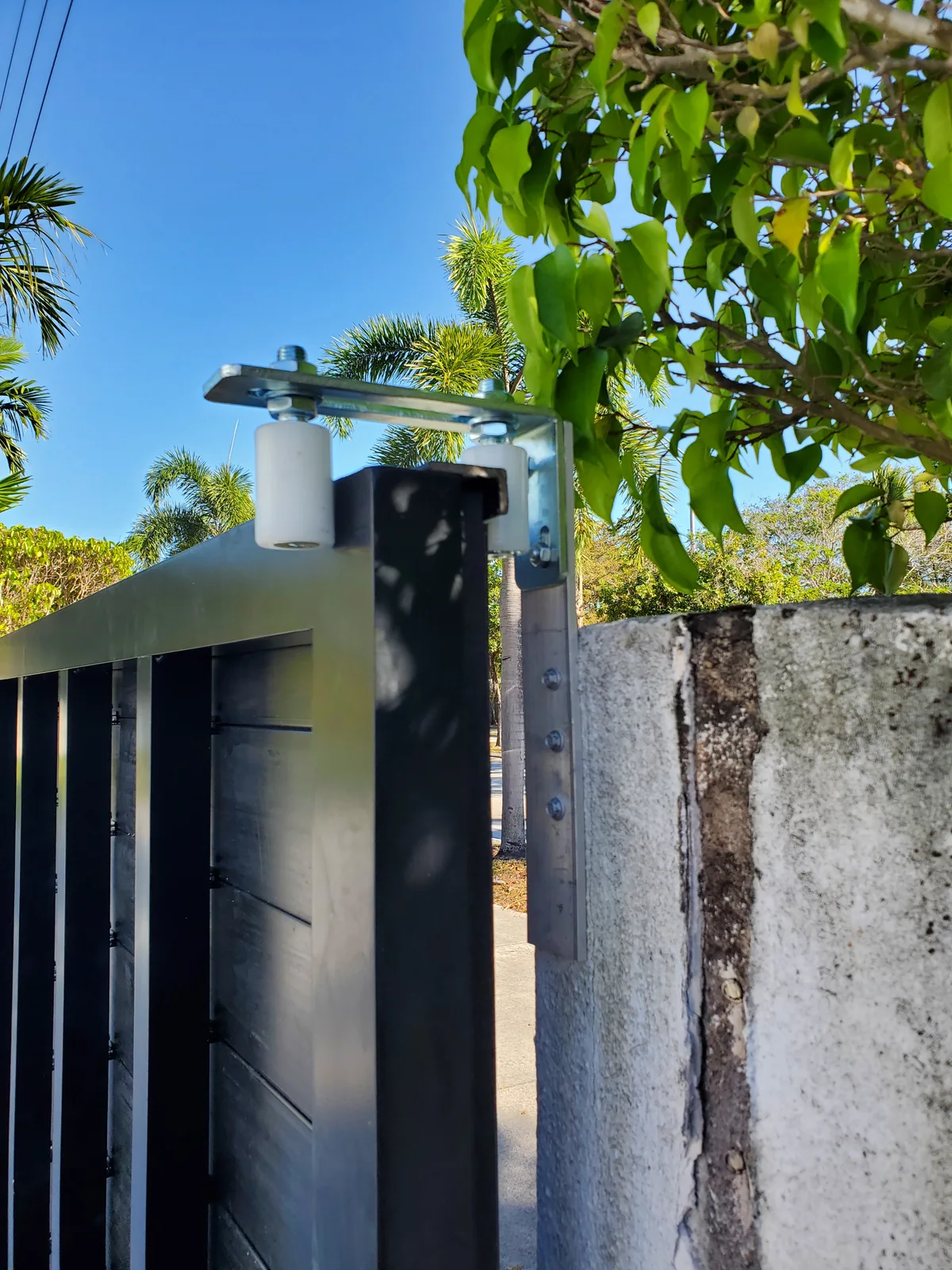
Technicians should also inspect posts, guides, rollers, stops, rack or chain components, and the gate frame. An operator should not be used to compensate for a gate that binds, sags, drags, or moves unpredictably by hand.
Correct mechanical problems first
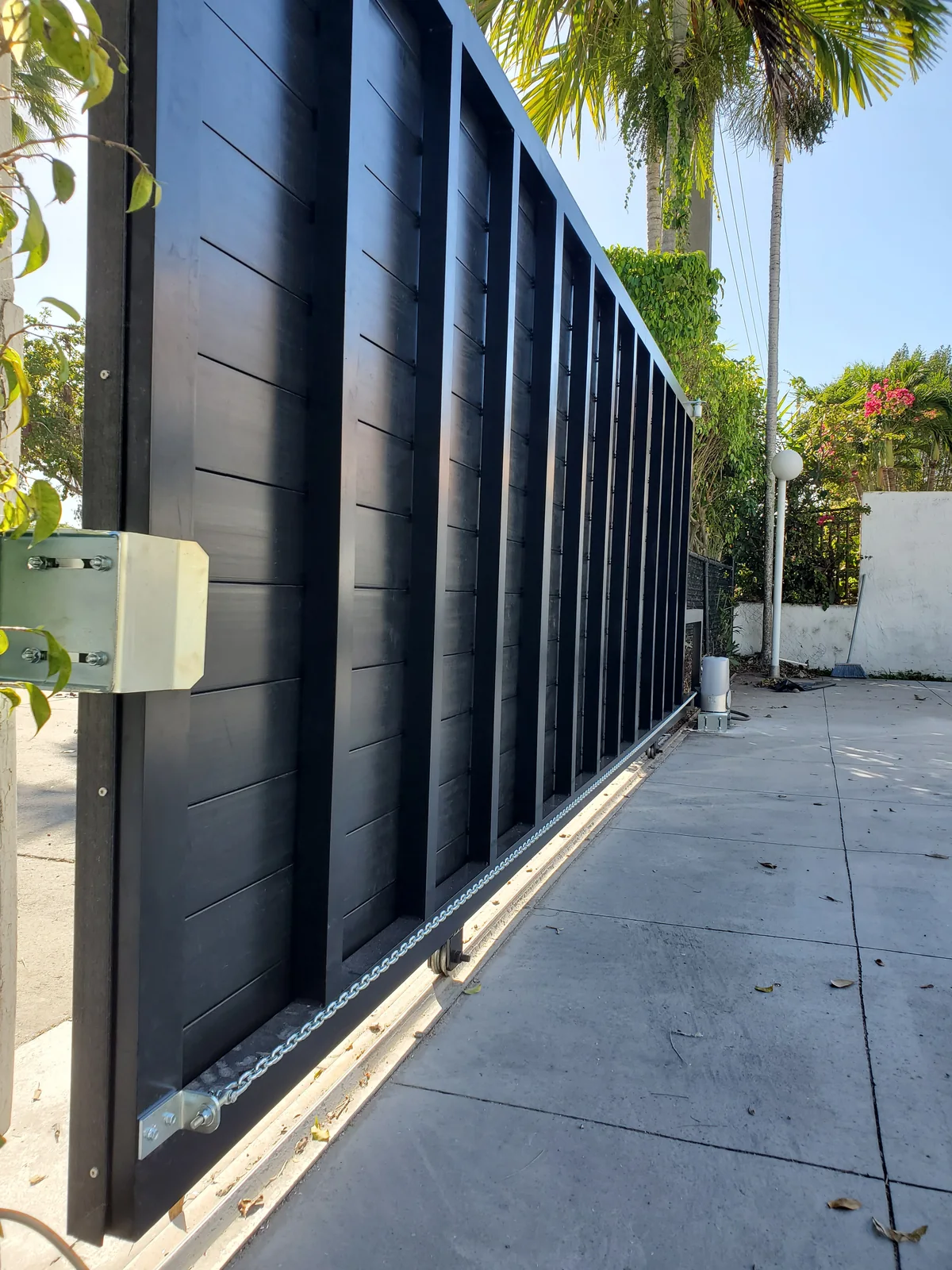
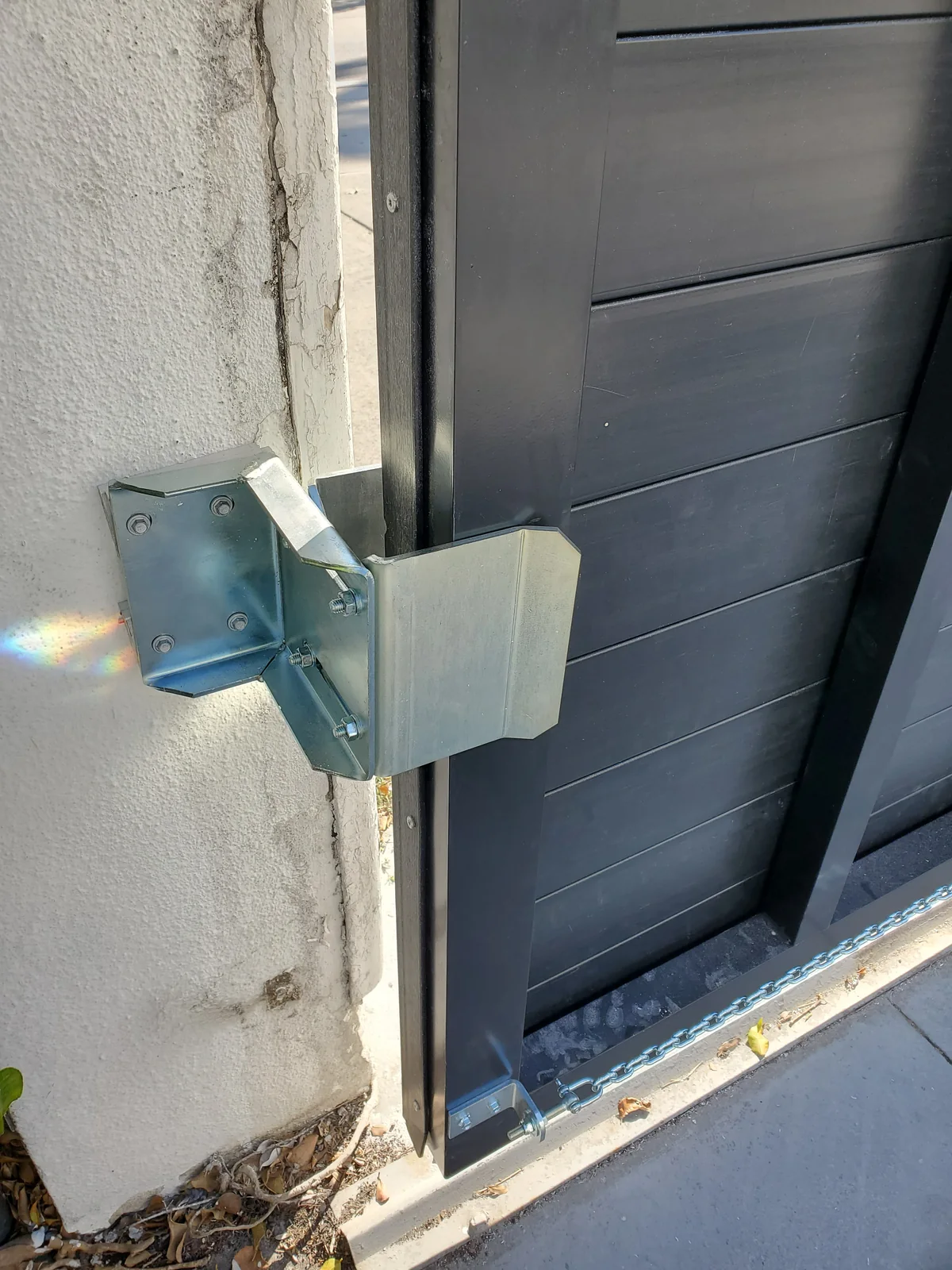
A powered gate begins as a mechanical system. Track condition, cantilever hardware, guide alignment, wheel wear, chain or rack engagement, and physical end stops must be corrected before programming force, speed, or limits.
- Free travel: the gate should move through its full path without binding or excessive resistance.
- Positive stops: physical limits should contain the gate even if an electrical setting is lost.
- Protected hardware: pinch points, exposed drive components, and service areas require appropriate guarding and access.
- Drainage and clearance: debris, standing water, vegetation, and pavement changes should not interfere with movement.
Select the operator for actual duty
Operator selection should account for gate weight and length, daily cycle count, wind exposure, available power, opening speed, required backup behavior, and the manufacturer’s application limits. A larger motor does not solve a poor mechanical installation or an undersized structure.
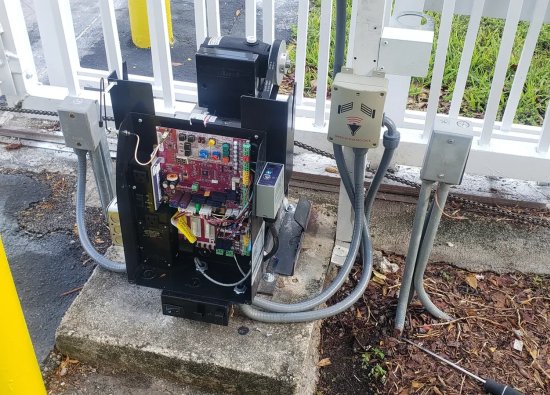
Control-board features also matter. The contractor should confirm support for safety inputs, access-control commands, monitored devices where required, timer logic, battery or emergency operation, diagnostics, and service documentation.
Design the safety system
Vehicle gates create moving hazards, so safety cannot be reduced to one photocell. The design should evaluate entrapment zones, gate edges, public or resident access, vehicle queues, pedestrians, emergency procedures, and the safety-device requirements of the selected operator and applicable installation.
Photoelectric sensors, monitored edges, loops, gate-position logic, warning devices, guards, and physical layout may all have roles. Acceptance testing should intentionally interrupt each protected zone and confirm that the gate stops, reverses, or inhibits movement as designed.
Connect access control and backup power
Keypads, credentials, telephone entry, license-plate workflows, remote releases, fire-department access, and management schedules should issue controlled commands rather than bypassing the gate operator’s safety logic. Every input should have a clear name and documented purpose.
Backup planning must cover the complete access path. Battery capacity, outage behavior, manual release, network equipment, intercoms, readers, and notification procedures should be tested together so property staff know what will happen during a power or communication failure.
Commission and maintain the gate
Commissioning should include repeated opening and closing cycles, safety-device tests, access-control commands, manual release, limit verification, obstruction response, and observation during normal vehicle traffic. Final settings and maintenance responsibilities should be documented for the owner.
Security Install US can service the operator, controls, access devices, and related wiring while coordinating mechanical gate repairs when needed. Preventive visits should look for wear, corrosion, loose hardware, damaged conduits, alignment changes, debris, and error history before a small problem becomes an access outage.
Frequently asked questions
These answers address the planning and service questions Miami property owners commonly ask about automatic sliding gates.
Can an existing sliding gate be automated?
Often, yes, if the gate structure, travel path, guides, stops, and manual movement are suitable. A site survey should identify mechanical repairs and available space before an operator is selected.
How is an automatic gate kept from hitting a vehicle or person?
The installation may use a coordinated set of photoelectric sensors, monitored edges, loops, controls, guards, and operating procedures. The exact design depends on the gate, operator, site layout, and applicable requirements.
Will the gate work during a power outage?
Outage behavior depends on the operator and system design. Battery backup, controlled opening, manual release, access devices, and property procedures should be selected and tested for the site.
How often should a sliding gate be serviced?
Frequency depends on cycle count, exposure, manufacturer guidance, operating history, and property risk. High-use gates and coastal installations may require more frequent inspection and maintenance.
Plan the moving gate, controls, and safety as one system
Security Install US / System64 can survey, install, integrate, repair, and maintain an automatic sliding gate for a Miami-area property.

We design and install cameras, access control, intercoms, and gates for homes and businesses in Miami-Dade. This article comes from the same site surveys we run on driveways, restaurants, and offices — not from a generic kit list.
About the team